
Robust HTTP Client Architecture in Node.js

How to Configure a Robust, Reliable, and Clean HTTP Client in Node.js (Production Guide)

馃殌 How to Configure a Robust, Reliable, and Clean HTTP Client in Node.js When building microservices or an API Gateway in Node.js, your HTTP client becomes critical infrastructure. Most engineers rely on default configurations like: const http = require('http'); http.request(options, callback).end(); It works. But in production? It can silently destroy your system under load. This guide explains: Why default HTTP client configuration is dangerous How to properly configure connection pooling Timeout and resilience strategies Handling slow downstream services Migrating to Undici (modern Node HTTP client) Performance comparison (http vs axios vs undici) Why Default HTTP Client Configuration Is Dangerous Since Node 19+, http.globalAgent enables keepAlive: true. That鈥檚 better than older versions. But production risk still exists. ...
March 4, 2026 路 7 min 路 Vicktor Desrony
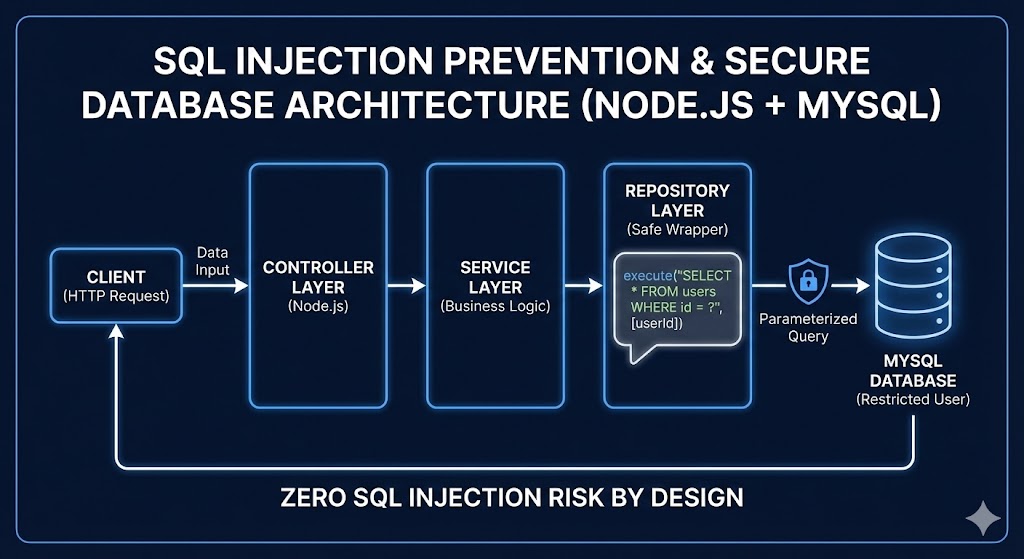
Diagram of a secure NodeJS and MySQL architecture

SQL Injection Prevention & Secure Database Architecture (NodeJS + MySQL)

1. Purpose This document defines the official engineering standard for preventing SQL injection vulnerabilities and ensuring secure database access. This guideline applies to all backend services interacting with MySQL. Our goal is to achieve zero SQL injection risk by architectural design. Not by filtering or detection, but by elimination. It鈥檚 a wrong mindset! 2. What is SQL Injection? SQL injection is a web security vulnerability that allows attackers to interfere with queries an application makes to its database. By inserting malicious SQL code into input fields, attackers can view, modify, or delete data, and in some cases, gain administrative control over the application. SQL Injection occurs when untrusted user input is interpreted as SQL code instead of data. ...

February 19, 2026 路 6 min 路 Vicktor Desrony